
performance is a systems Problem.
Most programs don’t fail because of effort. They fail because there’s no framework underneath the effort.
what I believe
After two decades in this field, one thing has become clear: the gap between athletes who develop and athletes who plateau almost never comes down to how hard they're working. It comes down to whether there's a real system underneath their training.
A system means: knowing how each athlete moves before you program anything. Building training around what's actually limiting performance, not what looks impressive. Educating coaches so the system runs whether you're in the room or not. Measuring what matters and adjusting accordingly over time.
That's what I build. Every time.

MOvement First
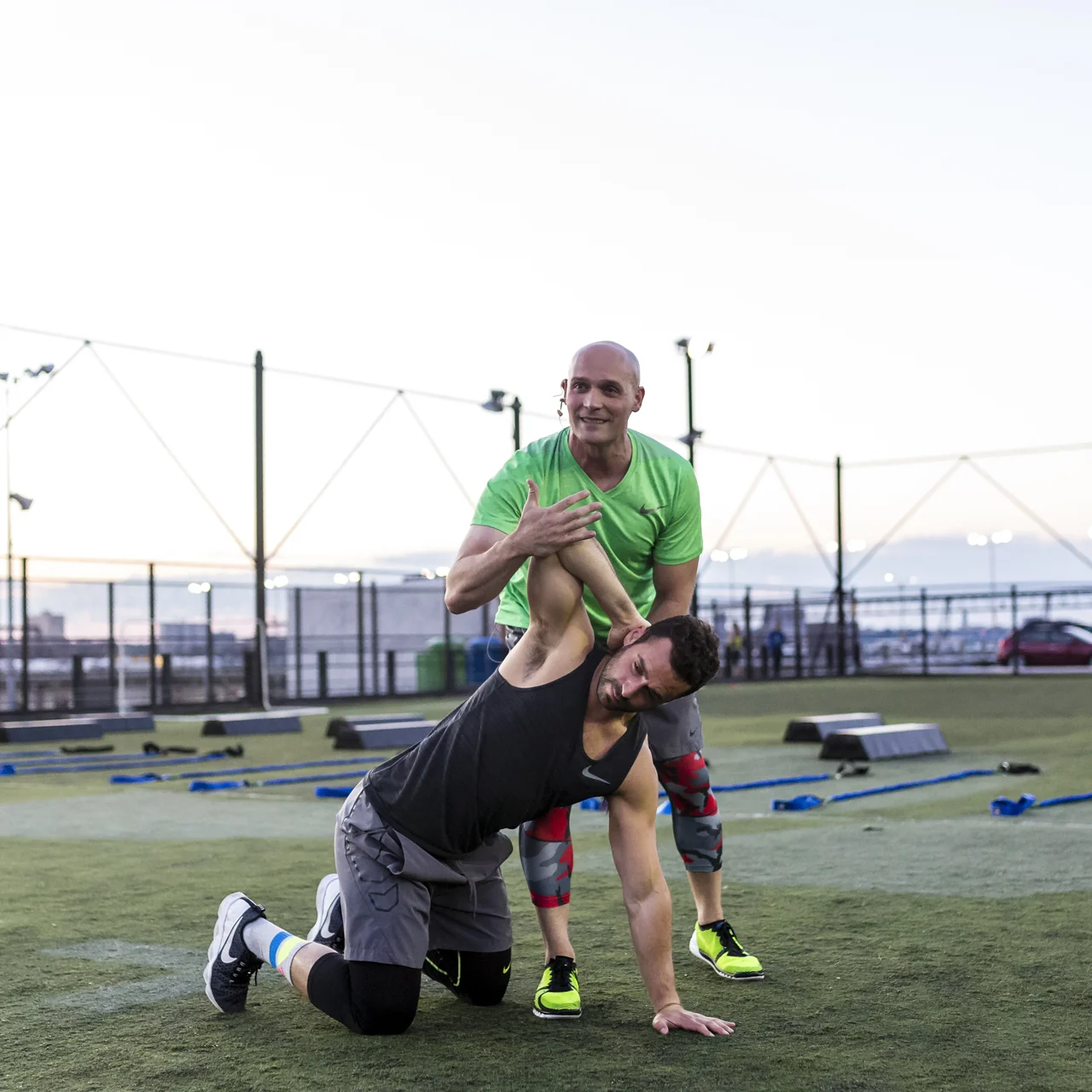
Everything I do starts with movement assessment. You can't build an effective performance program without knowing how your athletes actually move — where they compensate, where they're limited, where injury risk is hiding underneath what looks like strength or speed.
I use the Functional Movement Screen (FMS) and Functional Capacity Screen (FCS) as the foundation of every assessment. Not because they're the only tools, but because they give me — and the athletes and coaches I work with — an objective, repeatable baseline that makes everything else more accurate and more accountable.
Movement quality before movement quantity. That's not a philosophy — it's a discipline.
The Systems outlast the coach
The best thing I can build for any school or organization is a system that doesn't need me to keep running it. One where the coaches understand the framework, the athletes understand the why, and the standards are clear enough that everyone can hold themselves to them.
That's what separates a program from a collection of workouts. And it's what I spend most of my time building.
Long-Term Over Short-Term Results
Youth and high school athletics are full of programs optimized for this season. I understand why — coaches are judged on wins, athletes are motivated by playing time, and administrators are watching the scoreboard.
But the athletes who develop the most — and stay healthy the longest — are the ones trained within a long-term framework. One that respects where they are developmentally, builds capacity progressively, and doesn't sacrifice their future for a showcase performance today.
That's the standard I hold myself and every program I work with to.